India-Bangladesh Ganga Water Treaty Set to Expire on December 12: What Happens Next?
The India-Bangladesh Ganga Water Treaty expires on December 12, with renewal talks yet to begin. Here are the key challenges and possible next steps.
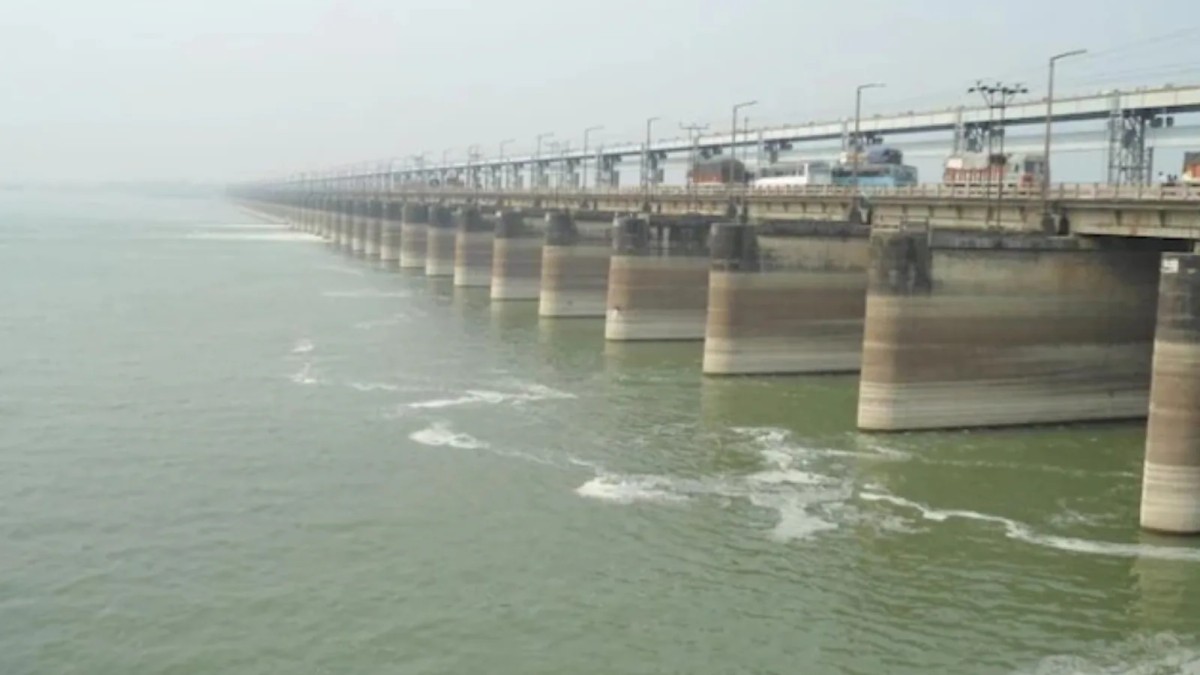
The 30-year-old Ganga Water Sharing Treaty between India and Bangladesh is facing uncertainty, with its current term set to expire on December 12. Despite the approaching deadline, formal negotiations on renewing the agreement have not yet begun, raising concerns that the two countries could enter a period without a renewed water-sharing arrangement.
Diplomatic and bilateral tensions between the neighbouring countries have added to the challenges. People familiar with the matter believe that reaching an agreement to temporarily continue the existing arrangement may also prove difficult. However, intervention by the political leadership of both countries could still help find a way forward.
Bangladesh Writes to India Seeking Renewal Talks
Bangladesh's Water Resources Minister Shahiduddin Chowdhury Anee wrote to his Indian counterpart, C.R. Patil, on November 17, requesting the start of discussions on renewing the Ganga Water Sharing Treaty. The letter was sent through diplomatic channels.
The treaty governs the sharing of Ganga waters at Farakka and is due to expire on December 12.
According to people familiar with the discussions, Bangladesh has completed its preparations for the renewal process. It has also formed a high-level technical committee and sought details from India about the composition of its negotiating team.
Dhaka is hoping that New Delhi will begin formal discussions before the existing agreement expires.
Key Challenges in Renewing the Ganga Water Treaty
Renewing the treaty is expected to involve several complicated issues that may take considerable time to resolve. Both countries will need to consider changing circumstances and their growing water requirements.
Some of the major challenges include:
-
Impact of climate change: Changes in rainfall patterns and climate conditions could affect the flow of the Ganga, making it necessary to reconsider existing water-sharing arrangements.
-
Growing demand for water: Population growth in both countries has increased the need for water, adding pressure to the existing framework.
-
Limited time: With the December 12 deadline approaching, there is little time left to negotiate and reach agreement on all the outstanding issues.
These factors could make it difficult for both sides to complete the renewal process before the treaty expires.
Technical Committee Proposal Agreed in 2024
India and Bangladesh had previously agreed to establish a joint technical committee to initiate the process of renewing the Ganga Water Treaty.
The decision was taken during the visit of then Bangladesh Prime Minister Sheikh Hasina to India in June 2024. Prime Minister Narendra Modi had also indicated that technical-level discussions would begin to facilitate the renewal of the agreement.
However, a person familiar with the matter said that despite India's stated commitment, Bangladesh's interim government did not take steps to move the process forward for nearly two years.
Sources also suggested that political-level discussions on the treaty could have taken place if Bangladesh Prime Minister Tarique Rahman had accepted two invitations extended by India this year.
India Wants Broader Bilateral Issues Addressed
India has also indicated that several other important bilateral matters remain unresolved. These include the restoration of railway services, the resumption of trade through land border routes, customs-related issues and border management.
According to another person familiar with the discussions, Bangladesh cannot expect negotiations to focus on just one issue while leaving other pending matters aside.
India's position, as described by people familiar with the matter, is that discussions should move forward on all outstanding bilateral issues rather than being limited exclusively to the Ganga water-sharing arrangement.
Could the Treaty Receive an Interim Extension?
An interim extension of the existing treaty has emerged as one possible option to provide additional time for negotiations before the December 12 deadline.
However, such an arrangement would require approval from the political leadership of both countries. Given the current state of bilateral relations, reaching an understanding on even a temporary extension may not be straightforward.
Meanwhile, an Indian delegation is scheduled to visit Bangladesh from November 21 to 23 for one of the three mandatory annual meetings of the joint committee established under the Ganga Water Treaty.
However, an extension of the treaty is not included in the agenda of this meeting.
Ganga Water Treaty Was Signed in 1996
The Ganga is one of the 54 rivers shared by India and Bangladesh. The two countries have had longstanding differences over the distribution of its waters.
To address these concerns, India and Bangladesh signed the Ganga Water Sharing Treaty in December 1996. The agreement was signed by then Indian Prime Minister H.D. Deve Gowda and Bangladesh Prime Minister Sheikh Hasina.
Apart from the Ganga, the Teesta is the other major river over whose water-sharing arrangements the two countries have not yet reached an agreement.
With the treaty's expiry date approaching, the coming weeks will be crucial for India and Bangladesh. Whether the two sides can begin formal negotiations, agree to an interim arrangement or allow the existing treaty to expire will depend on diplomatic engagement and political decisions in both capitals.
What's Your Reaction?
 Like
0
 Dislike
0
 Love
0
 Funny
0
 Wow
0
 Sad
0
 Angry
0

Writing has always come naturally to Aditya Tikku, who writes with enthusiasm. He became a published author as a result of his literary endeavors. Aditya Tikku, who was born into the family of Gauri and Surendra Nath Tikku, became passionate about social work as he grew older and utilized this as a means of helping other children with their education. He has also explored Prayagraj, Ujjain, and Nashik Kumbh.








Comments (0)