
India Targets Pakistan Army at UN Over Mineral Wealth, Cites Asim Munir's Wooden Box
India accused Pakistan's military of exploiting mineral resources for private gain at the UN, citing Army Chief Asim Munir's wooden box of minerals.
Newyork: India has accused Pakistan's military establishment of exploiting the country's natural resources for private gain, alleging that the army's control over mineral wealth is contributing to political instability and regional tensions.
The issue was raised at a United Nations Security Council meeting on natural resources and conflict, organised by Liberia. India's Permanent Representative to the UN, Ambassador Parvathaneni Harish, made the remarks while responding to comments by the Pakistani delegation.
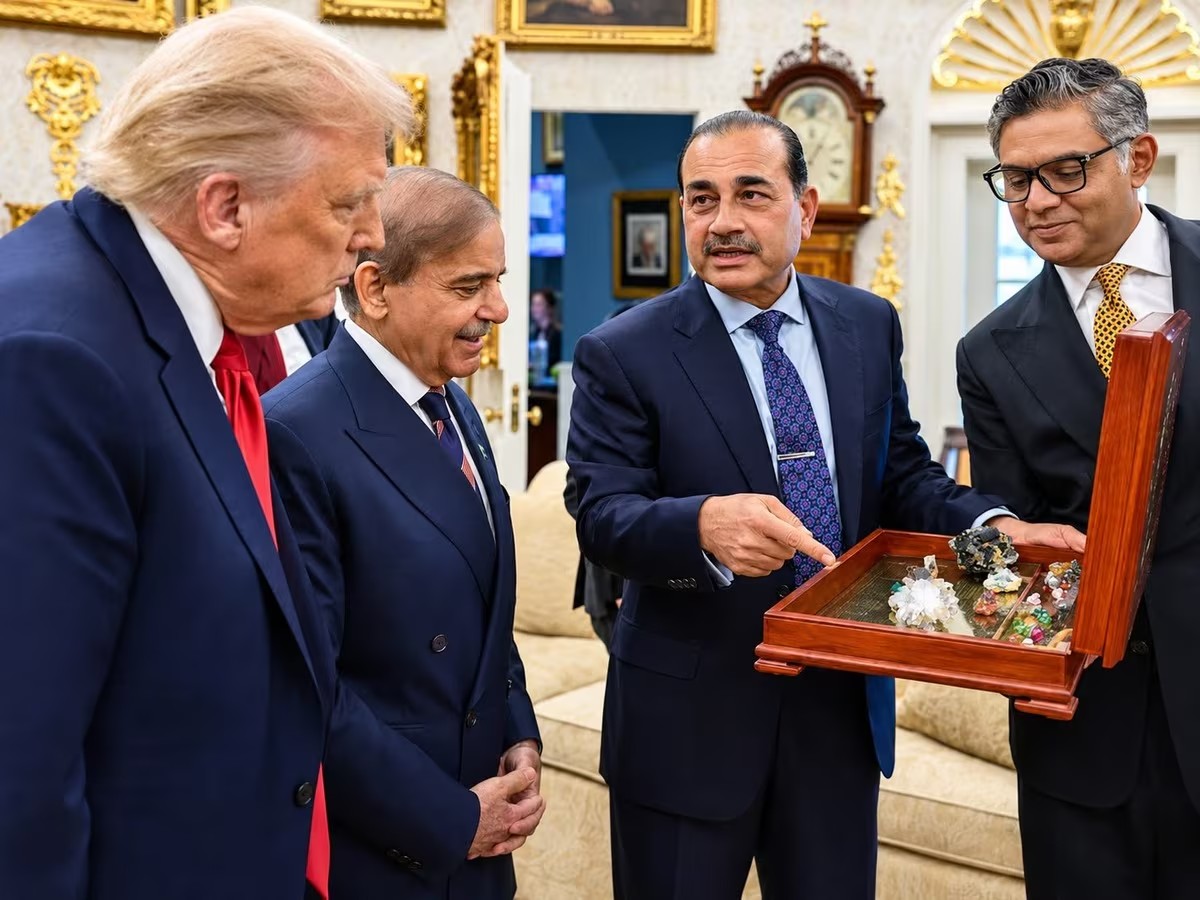
During his intervention, Harish referred to an image of Pakistan Army Chief Asim Munir displaying a wooden box filled with mineral samples to foreign leaders. India described the incident as an indication of the military's involvement in the exploitation of Pakistan's mineral resources.
The Indian representative also urged Pakistan to stop encouraging tensions with neighbouring countries and focus instead on using its natural wealth for the benefit of ordinary citizens.
India Responds to Pakistan's Remarks on the Indus Waters Treaty
The exchange took place after Pakistan's delegation raised the issue of the Indus Waters Treaty during the Security Council meeting.
Responding to the remarks, Ambassador Harish said India had not come to the forum to discuss bilateral disputes. However, he argued that Pakistan had used the meeting to pursue its own propaganda, making an Indian response necessary.
He reiterated that India's position on the Indus Waters Treaty remained clear and unchanged, adding that the country had already explained its stand at various international forums.
India Refers to Asim Munir's Wooden Box of Minerals
Targeting Pakistan's military establishment, the Indian ambassador referred to an incident from September last year in which Army Chief Asim Munir was seen presenting mineral samples to foreign leaders.
Harish said, "Last September, their Army Chief was seen displaying a wooden box filled with mineral stones to foreign leaders. This is a clear indication of the role of their army in this plunder."
He also alleged that the exploitation of mineral resources could be linked to political developments in Pakistan, including the recent dismissal of a provincial government and the imposition of emergency measures.
The reference was reportedly to an earlier meeting at the White House, where Pakistan Prime Minister Shehbaz Sharif and Army Chief Asim Munir presented rare minerals to US President Donald Trump.
Photographs from the meeting showed Munir displaying an open wooden box containing mineral samples, while Trump examined the contents and Sharif stood nearby.
India Says Pakistan's Military Should Prioritise Public Welfare
Ambassador Harish alleged that Pakistan's military establishment remains the country's real decision-making authority and that its leadership prioritises its own interests over the welfare of ordinary Pakistanis.
He argued that the country's mineral resources should be used to improve people's lives rather than strengthen the wealth and influence of the military establishment.
Harish also warned Pakistan against fuelling conflicts with neighbouring countries, saying that such policies were increasingly harming Pakistan itself.
According to India's position, natural resources should contribute to economic development, employment and public welfare rather than become a source of political instability and conflict.
India Highlights the Risks of Illegal Mining and Mineral Smuggling
Alongside its criticism of Pakistan, India also outlined its broader position on the responsible management of natural resources.
Harish said natural resources could play an important role in a country's development. However, illegal mining and smuggling can divert the financial benefits towards armed groups, potentially prolonging conflicts.
India argued that the international community should focus on implementing existing mechanisms effectively rather than creating entirely new international rules.
As an example, the Indian representative referred to the Kimberley Process, an international certification scheme designed to prevent the trade in conflict diamonds.
India is chairing the Kimberley Process in 2026. Harish said cooperation between governments, industry and civil society had helped restrict the trade in conflict diamonds while allowing legitimate diamond commerce to continue.
He added that India remained committed to making the mechanism more effective and inclusive.
India Says Local Communities Must Benefit from Mineral Wealth
India also emphasised that communities living in mineral-rich regions should receive a fair share of the economic benefits generated by mining activities.
According to Harish, sustainable resource management and lasting peace are difficult to achieve without the participation of local communities.
He cited India's mining laws as an example, explaining that companies are legally required to spend money on the development of local communities.
The Indian position was that revenue generated from natural resources should support people living in mining areas rather than benefit only governments, corporations or powerful institutions.
India Says UN Security Council Should Focus on Peace and Security
Towards the end of the meeting, India also underlined the need to maintain a clear division of responsibilities within the United Nations system.
Harish said the primary responsibility of the UN Security Council was to maintain international peace and security.
He argued that broader issues such as sustainable development and natural resource management should be discussed in appropriate UN bodies, including the General Assembly and the Economic and Social Council (ECOSOC).
India reiterated its willingness to share its experience and work with international partners to promote sustainable development and lasting peace through responsible management of natural resources.
The remarks placed Pakistan's military and its alleged control over mineral resources at the centre of India's intervention, while also highlighting New Delhi's wider concerns about the connection between resource exploitation, political instability and international security.
What's Your Reaction?
 Like
0
 Dislike
0
 Love
0
 Funny
0
 Wow
0
 Sad
0
 Angry
0

Ajay Gupta is a Senior Digital Content Producer at Prime Time India (PTI) Digital. He brings 19 years of experience, spanning both field reporting and desk-based editorial work. He began his journalistic career in 2006 with the Hindi newspaper Jansansar. He possesses extensive experience covering politics and crime, and has also worked on the central desk at Dainik Jagran, Nai Dunia, Haribhoomi. Furthermore, he has covered numerous elections from the ground. For the past six years, he has been working on the digital news desk at PTI (Prime Time India). He also has a strong grasp of Google Trends and podcasts.







Comments (0)