
India to Drive 90% of South Asia's Export Growth by 2035, Oxford Economics Report Says
India is projected to contribute over 90% of South Asia's additional container exports by 2035, while Bangladesh is expected to outpace Pakistan in textile exports.
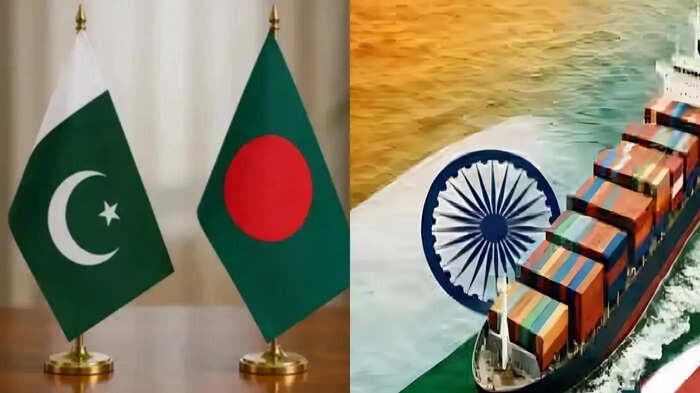
New Delhi: South Asia's global trade landscape is expected to undergo a major transformation over the next decade, with India emerging as the region's biggest driver of container export growth. A new report by Oxford Economics estimates that India will account for more than 90% of the region's additional container exports between 2025 and 2035.
The report, titled Traditional Industries Power South Asia's Containerised Trade, projects that India's container exports will grow at an annual rate of 5.4% during the period. Agricultural products, textiles, garments and footwear are expected to play a major role in driving this expansion.
The projections also point to a widening gap between Bangladesh and Pakistan. Bangladesh is expected to record significantly stronger growth in textile and garment exports, while Sri Lanka could benefit from the resulting increase in regional shipping activity, particularly through Colombo Port.
India Expected to Account for More Than 90% of Additional Exports
According to Oxford Economics, South Asia's container exports are projected to increase from 11 million TEUs (twenty-foot equivalent units) in 2025 to 18 million TEUs by 2035.
India alone is expected to contribute more than 90% of this additional volume, equivalent to approximately 6.3 million extra TEUs.
The country's container exports are forecast to expand at an annual rate of 5.4%, exceeding the projected regional average of 4.9%.
Other countries are expected to record slower growth. Bangladesh's annual container export growth is projected at 3.9%, while Sri Lanka and Pakistan are expected to remain below 2%.
These estimates underline India's growing importance in South Asia's export and shipping ecosystem.
Traditional Industries to Drive India's Export Expansion
The report suggests that India's export growth will be led more by traditional industries than by high-technology sectors.
Agricultural raw materials are expected to make the largest contribution, adding approximately 1.1 million TEUs to India's container exports between 2025 and 2035.
Textiles, garments and footwear are projected to contribute another 910,000 TEUs.
Other sectors expected to support export growth include:
-
Base metals
-
Chemicals
-
Plastics
-
Rubber products
Electronics and electrical equipment are expected to contribute only around 250,000 additional TEUs, accounting for approximately 4% of the total projected growth.
One reason highlighted in the report is that high-value, lightweight products such as semiconductors are often transported by air rather than through container shipping.
The United States is also expected to become an increasingly important destination for Indian container exports. By 2035, shipments from India to the US are projected to increase by around 600,000 TEUs. Exports to China and Vietnam are also expected to rise significantly.
Bangladesh Expected to Outpace Pakistan in Textile Exports
The export growth gap between Bangladesh and Pakistan is expected to widen over the next decade, particularly in the textile and garment industry.
Although Pakistan's total container exports were nearly twice those of Bangladesh in 2025, its projected annual growth rate is only around 1%.
Bangladesh, meanwhile, is expected to add approximately 256,000 TEUs in textile and garment exports by 2035. This is more than three times Pakistan's projected additional volume of less than 85,333 TEUs.
Bangladesh's competitive position is supported by relatively low production costs and established relationships with international buyers.
The country is increasingly focused on ready-made garments, including knitted and woven clothing. These products are expected to account for around 80% of Bangladesh's total textile exports by 2035.
Pakistan's textile export sector, in comparison, remains more concentrated in home textiles such as bed linen and towels. The industry also faces challenges linked to high energy costs and structural constraints.
The projections suggest that Bangladesh could strengthen its position as a major garment-exporting economy, even as Pakistan starts with a larger container export base.
Sri Lanka Could Benefit From Rising Bangladesh Exports
The expansion of Bangladesh's textile and garment exports is expected to create additional opportunities for regional transshipment ports.
Colombo Port in Sri Lanka is likely to benefit significantly. Oxford Economics estimates that around 48% of Bangladesh's textile and garment containers could pass through Colombo by 2035.
This would further strengthen Colombo's position as an important regional shipping and transshipment hub.
Singapore is expected to handle approximately 18% of these shipments, while the share carried through direct shipping services is projected to remain below 7%.
The figures highlight how changes in manufacturing and export patterns in one South Asian economy can create opportunities for ports and logistics networks across the region.
Infrastructure Will Be Critical for India's Export Ambitions
The report points to strong growth potential for South Asia's container trade over the coming decade. The region is projected to record faster growth in percentage terms than China and Southeast Asia.
For India, however, turning its export potential into a lasting competitive advantage will require improvements in supporting infrastructure.
Port capacity, inland transportation networks and logistics costs will remain crucial factors in determining how efficiently Indian manufacturers can reach international markets.
With agriculture, textiles, footwear and other traditional industries expected to drive much of the expansion, India's ability to improve supply chains and shipping infrastructure could play a decisive role in shaping its position in global trade by 2035.
What's Your Reaction?
 Like
0
 Dislike
0
 Love
0
 Funny
0
 Wow
0
 Sad
0
 Angry
0

Ajay Gupta is a Senior Digital Content Producer at Prime Time India (PTI) Digital. He brings 19 years of experience, spanning both field reporting and desk-based editorial work. He began his journalistic career in 2006 with the Hindi newspaper Jansansar. He possesses extensive experience covering politics and crime, and has also worked on the central desk at Dainik Jagran, Nai Dunia, Haribhoomi. Furthermore, he has covered numerous elections from the ground. For the past six years, he has been working on the digital news desk at PTI (Prime Time India). He also has a strong grasp of Google Trends and podcasts.














Comments (0)