
Rajasthan Panchayat Elections: Congress Beats BJP as RLP Makes Strong Gains
Congress outperforms BJP in Rajasthan's panchayat elections held using ballot papers, winning 2,990 panchayat samiti and 143 zila parishad seats as RLP strengthens its rural presence.
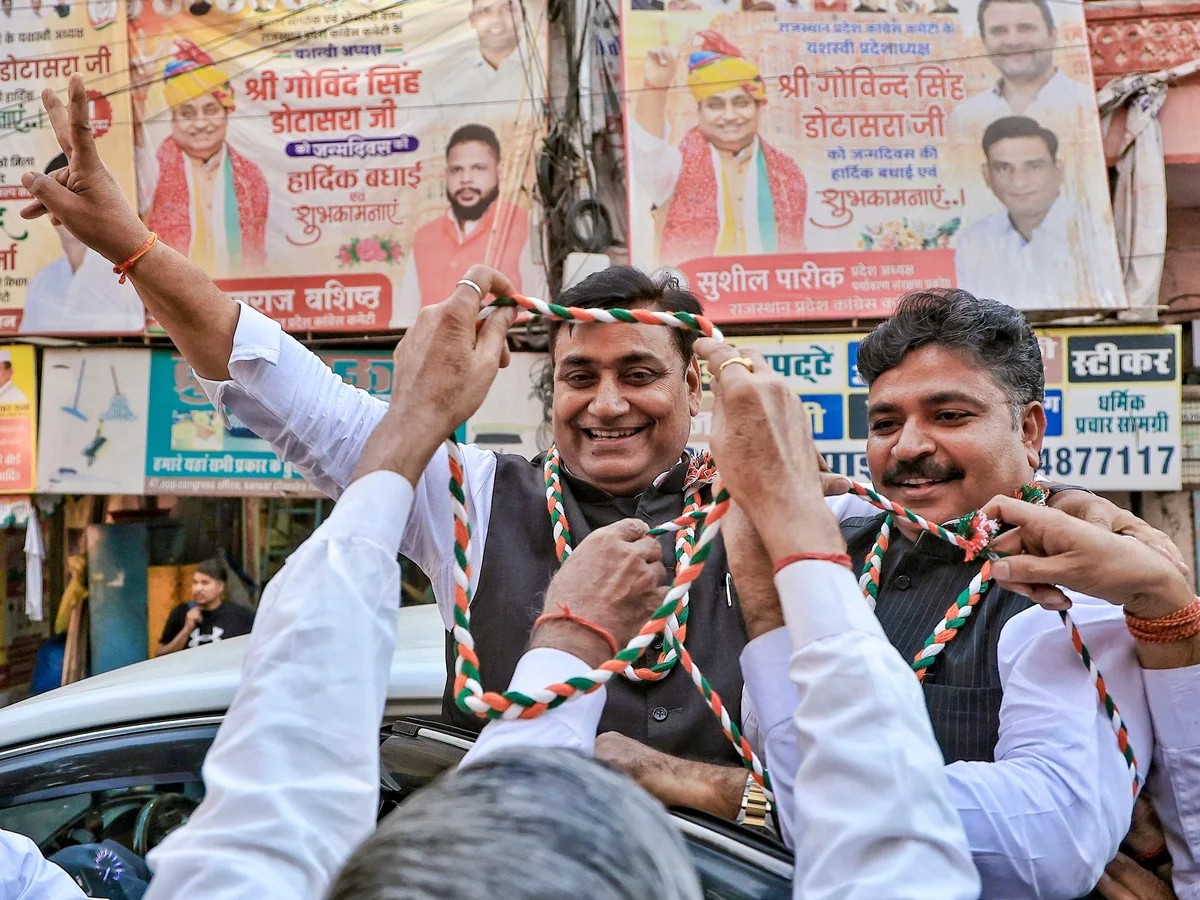
The results of Rajasthan's rural local body elections have triggered fresh political debate in the state, with the Congress outperforming the ruling BJP in panchayat samiti and zila parishad contests. The outcome is particularly significant because the elections were conducted using ballot papers, an issue that the Congress has repeatedly raised while demanding a return to ballot paper voting for elections across the country.
The results have delivered a setback to the BJP, which had performed strongly in urban local body elections just a few months earlier. Several prominent BJP leaders also faced disappointing results in areas considered their political strongholds.
According to figures released by the State Election Commission, Congress won 2,990 panchayat samiti seats, compared with 1,795 secured by the BJP. In the zila parishad elections, Congress won 143 seats, while the BJP managed 83.
Former BJP ally Hanuman Beniwal's Rashtriya Loktantrik Party (RLP) also made a significant impact, winning 438 panchayat samiti seats and four zila parishad seats. Independent candidates secured 516 panchayat samiti seats, highlighting the fragmented nature of rural political contests.
The results stand in contrast to the BJP's recent performance in urban Rajasthan, where it had managed to form boards in 197 of the state's 301 urban local bodies.
Here are five major takeaways from the Rajasthan panchayat election results.
1. Congress Reverses Its Fortunes Compared With Previous Rural Elections
Congress's latest performance marks a significant change from the 2020-21 panchayat elections, when the BJP had maintained an advantage in rural Rajasthan.
In the main phase of the elections held across 21 districts in December 2020, the BJP won 353 of the 636 zila parishad seats, while Congress secured 252. The BJP also gained control of zila parishad boards in around 14 to 15 districts, whereas Congress managed to form boards in only five districts.
The BJP had also led in panchayat samiti elections, winning 1,989 seats against Congress's 1,852.
Although Congress improved its position in subsequent phases, including in areas such as Jaipur, the latest results point to a stronger comeback for the party in rural politics.
However, a direct comparison between the two election cycles is not straightforward. Following administrative restructuring in Rajasthan, the number of zila parishads increased from 33 to 41, while the number of panchayat samitis rose from 352 to 457.
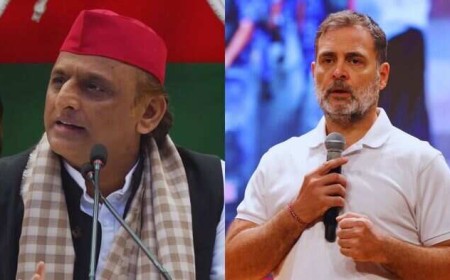
Congress leader Rahul Gandhi welcomed the latest results and thanked the people of Rajasthan in a post on X. He described the outcome as a public response against the BJP's 'double-engine' government in a state where the party is in power.
2. BJP Suffers Setbacks in Strongholds of Senior Leaders
One of the biggest concerns for the BJP is that the party struggled in several areas associated with influential leaders.
In Sikar, the family of Urban Development and Housing Minister Jhabar Singh Kharra suffered a major electoral setback. His wife, Shanti Devi, and son Ajay Singh lost their panchayat samiti elections. His other son, Durga Singh, contested as an independent candidate but also failed to win.
The BJP's performance was particularly disappointing in Jhotwara, the Assembly constituency represented by minister Rajyavardhan Singh Rathore. Of the 15 panchayat samiti seats in the area, the BJP managed to win only one.
In contrast, Congress state president Govind Singh Dotasara performed well in his home region of Sikar. The party also secured an important advantage in Tonk, an area associated with Congress leader Sachin Pilot.
Following the results, Rajasthan BJP president Madan Rathore accepted the public verdict and said the party would review the reasons behind its disappointing performance.
3. Hanuman Beniwal's RLP Strengthens Its Political Presence
The Rashtriya Loktantrik Party, led by Hanuman Beniwal, emerged as one of the significant beneficiaries of the rural elections.
According to the figures reported, the party won 438 panchayat samiti seats and four zila parishad seats.
The result represents a substantial increase compared with the 2020 rural elections, when the RLP was allied with the BJP and won 60 panchayat samiti seats and 10 zila parishad seats in the main phase.
Beniwal claimed that his party had received more votes than the BJP in Nagaur and could also secure the zila pramukh position there.
He also claimed that the RLP performed well in Didwana-Kuchaman, Barmer, Balotra, Bikaner, Churu and parts of Jaipur.
According to Beniwal, the party was also moving towards a majority in the Sanganer panchayat samiti, which falls within Chief Minister Bhajanlal Sharma's Assembly constituency.
The results indicate that the RLP continues to have a significant regional presence, particularly among sections of the rural electorate, including farmers and younger voters.
4. Congress Wins 14 of Jaipur District's 22 Panchayat Samitis
Congress also delivered a strong performance in the rural areas of Jaipur district, winning 14 of the 22 panchayat samitis.
The result made Congress the largest party in the district's rural local body elections. However, the BJP and RLP also managed to establish their presence in some areas.
The BJP secured majorities in Chomu and Sambhar, while the RLP won in Sanganer.
In five panchayat samitis, no party secured a clear majority, potentially making independent members and political negotiations important during the formation of local governing bodies.
The results were mixed for several prominent political families as well.
Parakram Singh, son of senior BJP leader Rajendra Rathore, won Zila Parishad Ward 39 by a margin of 17,861 votes. His daughter-in-law, Kanika Singh, also won Ward 23 by 2,384 votes.
On the other hand, the defeat of Jhabar Singh Kharra's family demonstrated that political influence at the state level does not necessarily guarantee success in local elections.
5. Independents and Smaller Parties Could Influence Rural Power Equations
Independent candidates and regional parties played an important role in the Rajasthan panchayat elections. Their performance could prove decisive in areas where no single party has secured a clear majority.
Independent candidates won the highest number of panchayat samiti seats among the non-major-party contestants, securing 516 seats. The RLP followed with 438 seats, while the Bharat Adivasi Party (BAP) won 215.
The reported performance of other parties in panchayat samiti elections was as follows:
-
Bharat Adivasi Party (BAP): 215 seats
-
Communist Party of India (Marxist): 50 seats
-
Bahujan Samaj Party (BSP): 44 seats
-
Aam Aadmi Party (AAP): 2 seats
In the zila parishad elections, independent candidates won five seats. The RLP secured four, the CPI(M) won three and the BSP took one seat.
An important aspect of the election process is that zila pramukhs and panchayat samiti pradhans are not directly elected by the public. These positions are decided through voting by the elected members of the respective local bodies.
As a result, independent representatives and smaller parties could play a crucial role in government formation wherever a clear majority is missing.
The zila pramukh elections are scheduled for November 25, while elections for panchayat samiti pradhans are scheduled for November 27. Counting in Kota, Baran, Karauli and Sri Ganganagar has reportedly been postponed until December 17.
Congress Gains Momentum Ahead of Rajasthan's 2028 Assembly Elections
The rural election results have given Congress a fresh political boost ahead of the 2028 Rajasthan Assembly elections. Its performance across several districts suggests that the party has regained ground in parts of the rural electorate.
For the BJP, the outcome raises questions about its grassroots organisation and its ability to maintain support beyond urban centres.
The strong showing by the RLP and independent candidates also indicates that Rajasthan's rural political landscape remains competitive and that regional forces could influence future electoral calculations.
While panchayat elections do not necessarily predict Assembly election outcomes, the latest results provide Congress with an opportunity to strengthen its organisation and build on its rural support base before the next state elections.
What's Your Reaction?
 Like
0
 Dislike
0
 Love
0
 Funny
0
 Wow
0
 Sad
0
 Angry
0

Ajay Gupta is a Senior Digital Content Producer at Prime Time India (PTI) Digital. He brings 19 years of experience, spanning both field reporting and desk-based editorial work. He began his journalistic career in 2006 with the Hindi newspaper Jansansar. He possesses extensive experience covering politics and crime, and has also worked on the central desk at Dainik Jagran, Nai Dunia, Haribhoomi. Furthermore, he has covered numerous elections from the ground. For the past six years, he has been working on the digital news desk at PTI (Prime Time India). He also has a strong grasp of Google Trends and podcasts.










Comments (0)