Trump, Xi Jinping and Putin's Shenzhen Summit: Impact on India and Europe
The reported Trump, Xi Jinping and Putin meeting in Shenzhen raises questions about a new global order and its implications for India and Europe.
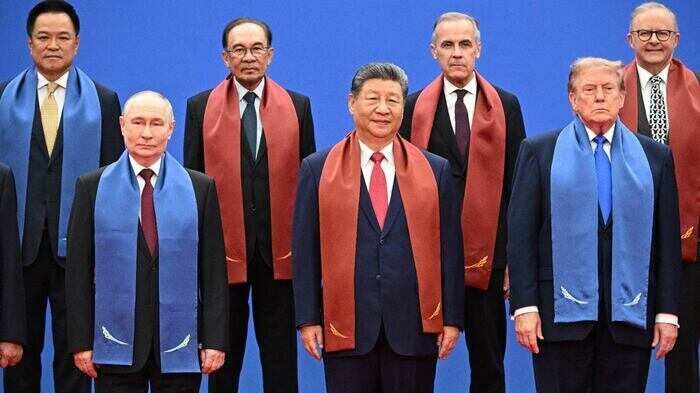
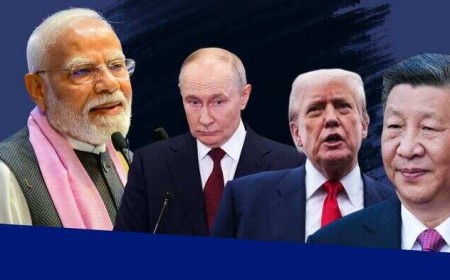
A high-profile meeting involving US President Donald Trump, Chinese President Xi Jinping and Russian President Vladimir Putin in China's Shenzhen has sparked debate over the possibility of a new global power structure. The proposed alignment of three major powers could have significant implications for international diplomacy, with India and Europe closely watching the emerging geopolitical equations.
The central argument surrounding the Shenzhen meeting is that the world could be moving towards a more clearly defined multipolar order, with the United States, China and Russia occupying the top tier of global influence. India, Europe, Japan and Brazil would remain important powers in this evolving arrangement, while other emerging economies would form another layer.
For Xi Jinping, hosting the American president in China would carry considerable diplomatic significance. It could reinforce Beijing's position as a major global power and strengthen its claim to an influential role in shaping international affairs.
Shenzhen Summit and the Proposed G3 Power Structure
The meeting has attracted attention not only because of the three leaders involved but also because of the symbolism surrounding their reported engagements.
According to the report, Xi Jinping personally welcomed Donald Trump at the airport, while Putin was not received by the Chinese president in the same manner. The difference has been interpreted by some observers as a possible reflection of the perceived hierarchy among the three powers.
The reported schedule also suggests that Xi Jinping would first meet Trump at Kylin Villa, followed by discussions involving Putin and the three leaders.
The broader geopolitical debate centres on whether these interactions signal the emergence of a new strategic understanding among Washington, Beijing and Moscow.
What Is the 'Shenzhen International System'?
The term 'Shenzhen International System' has reportedly emerged in discussions among Chinese strategic thinkers.
Wang Wen, a professor at Renmin University, is credited with using the expression to describe the potential significance of the gathering. The terminology draws comparisons with historical agreements and diplomatic settlements that helped shape international power structures.
These include the 1648 Peace of Westphalia, the 1815 Congress of Vienna, the 1919 Treaty of Versailles and the 1945 Yalta Conference.
The comparison suggests that the Shenzhen meeting could become part of a wider discussion about how global influence and international relations are organised.
However, Chinese scholars have reportedly been cautious about officially describing the arrangement as a 'G3'. One concern is that such terminology could create the impression that three major powers are attempting to divide the world into separate spheres of influence.
US President Donald Trump is reportedly more comfortable with the G3 description. Meanwhile, Russian political thinker Alexander Dugin has shared a representation of a possible new global order on social media platform X, depicting the United States, China and Russia as three dominant centres of power.
These interpretations remain part of a wider geopolitical debate rather than evidence of a formally established global arrangement.
Why Europe Is Uneasy About the Meeting
The reported participation of Washington, Beijing and Moscow in a common diplomatic framework could create discomfort among European countries.
The United States, China and Russia are all permanent members of the United Nations Security Council and possess veto powers. The United Kingdom and France, despite holding the same status, are not part of the proposed three-power grouping discussed in the report.
European governments have previously supported efforts to isolate Putin diplomatically over Russia's war in Ukraine. A high-profile engagement involving the Russian president alongside Trump and Xi Jinping could weaken those efforts and raise questions about Europe's influence in major international negotiations.
For Moscow, closer engagement with Washington and Beijing could represent an opportunity to reduce diplomatic isolation and strengthen its international standing.
The possibility of a new understanding among the three powers therefore raises concerns about whether European interests could receive less attention in future global negotiations.
Why India Needs to Watch the Changing Equations
For India, the developments present both opportunities and strategic challenges.
On one hand, reduced tensions between the United States and Russia could make it easier for New Delhi to maintain its relationships with both countries. India has important defence, energy and strategic partnerships with Moscow, while Washington remains a significant partner in technology, trade and regional security.
On the other hand, China's growing influence in any proposed global arrangement could create additional concerns for India.
Beijing's emergence as
What's Your Reaction?
 Like
0
 Dislike
0
 Love
0
 Funny
0
 Wow
0
 Sad
0
 Angry
0

Jaspreet Walia is a digital content producer at Prime Time India. He has 6 years of experience in journalism and covers international affairs (world section). He began his digital career with Amar Ujala, subsequently worked with Surbhi Saloni Hindi and Patrika, and is now with Prime Time India. He completed his education at Chaudhary Charan Singh University and the Indian Institute of Mass Communication.







Comments (0)