
New ATM Rules Come Into Effect: RBI Sets Rs 23 Fee for Transactions Beyond Free Limit
RBI's new ATM rules came into effect on November 27, 2026. Know the free transaction limits, Rs 23 fee on extra transactions and revised cash withdrawal guidelines.
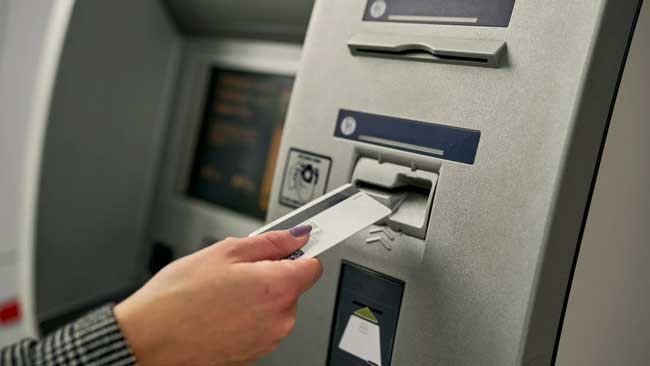
Desk : The Reserve Bank of India (RBI) has issued new guidelines for bank customers using ATMs to withdraw cash. The revised rules clarify the number of free ATM transactions allowed each month, charges applicable to transactions beyond the prescribed limit, and provisions related to cash withdrawals through ATMs and Point of Sale (PoS) machines. The new directions came into effect on November 27, 2026.
The RBI has consolidated 17 existing circulars related to cash withdrawals through ATMs and PoS terminals into a single Master Direction. The move aims to improve transparency in banking services and ensure that customers have a clearer understanding of transaction-related rules and charges.
How Many Free ATM Transactions Are Allowed Every Month?
Under the revised guidelines, customers will continue to receive a limited number of free ATM transactions every month.
Customers can make up to five free transactions at their own bank's ATMs. When using another bank's ATM, the free transaction limit will be three per month in metro cities and five per month in non-metro cities.
The free transaction limit includes both financial transactions, such as cash withdrawals, and non-financial transactions, such as balance enquiries.
ATM Transactions Beyond the Free Limit to Cost Up to Rs 23
Once customers exhaust their monthly free transaction limit, banks can charge a maximum fee of Rs 23 for each additional transaction. Applicable taxes may be charged separately.
The RBI has also emphasised transparency in transaction-related charges so that customers are informed about applicable fees and can keep track of their ATM usage.
Cash Withdrawal of Up to Rs 10,000 from Other Bank ATMs
Under the new provisions, customers can withdraw up to Rs 10,000 in a single transaction from another bank's ATM.
However, customers must also follow the daily cash withdrawal limits prescribed by their respective banks.
Failed ATM Transactions Will Not Count Towards Free Limits
The revised guidelines also provide relief to customers in cases of unsuccessful ATM transactions.
If a transaction fails due to technical issues, network problems or unavailability of cash in the ATM, it will not be counted towards the customer's monthly free transaction limit.
Banks will also not be permitted to charge customers for such failed transactions.
Cash Withdrawal Facility Through PoS Machines
The RBI has also clarified the provisions governing cash withdrawals through Point of Sale (PoS) machines available at retail outlets.
Customers can use debit cards, eligible full-KYC Prepaid Payment Instruments (PPIs) and UPI to access this facility.
Under the prescribed limits, customers can withdraw a maximum of Rs 2,000 in a single transaction, subject to an overall monthly withdrawal limit of Rs 10,000.
What Do the New RBI Guidelines Mean for Bank Customers?
The revised directions are aimed at making ATM and PoS-based cash withdrawal services more transparent and customer-friendly. By consolidating existing rules into a single Master Direction, the RBI seeks to make transaction limits and applicable charges easier to understand.
Customers should keep track of their monthly free ATM transactions to avoid additional charges and remain aware of the withdrawal limits applicable to their bank accounts.
What's Your Reaction?
 Like
0
 Dislike
0
 Love
0
 Funny
0
 Wow
0
 Sad
0
 Angry
0

Jaspreet Walia is a digital content producer at Prime Time India. He has 6 years of experience in journalism and covers international affairs (world section). He began his digital career with Amar Ujala, subsequently worked with Surbhi Saloni Hindi and Patrika, and is now with Prime Time India. He completed his education at Chaudhary Charan Singh University and the Indian Institute of Mass Communication.














Comments (0)