
Ravivaar: The Spiritual Significance of Worshipping Lord Surya in Hindu Tradition
Discover the spiritual significance of Ravivaar, why Lord Surya is worshipped as the Visible God, and the traditions, rituals and health benefits associated with Sun worship.
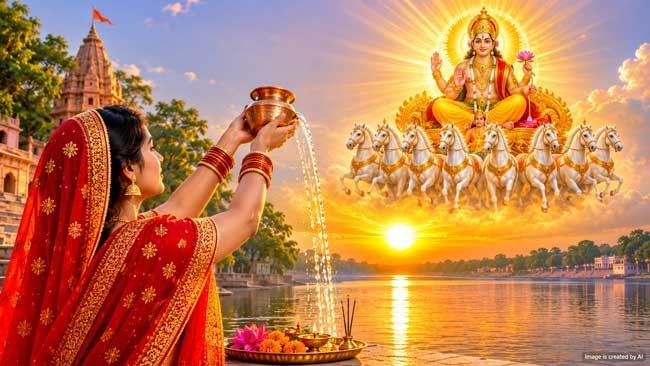
In the Sanatan tradition, the Sun is regarded as much more than a source of light and energy. It symbolises life, consciousness, good health and positivity. This is why Surya Dev, the Sun God, is worshipped as the Pratyaksha Devta or the Visible God. Ravivaar holds special significance for offering prayers to the Sun and awakening inner spiritual energy.
In Indian culture, nature has never been viewed merely as a collection of resources. Rivers, mountains, trees, the sky and other natural elements have traditionally been regarded as manifestations of the divine. Among these, the Sun occupies a particularly important position. It is one of the few divine manifestations that human beings can witness with their own eyes every day. With sunrise, life and daily activities begin across the world, while sunset signals the arrival of rest and tranquillity.
This is why the Sun is known as Pratyaksha Devta in Sanatan Dharma. It is not just an object of religious faith but also the foundation of life on Earth.
Why Is Ravivaar Dedicated to Lord Surya?
In Hindu tradition, each day of the week is associated with the worship of a particular deity. Ravivaar is dedicated to Lord Surya.
According to religious beliefs, worshipping the Sun God on this day brings good health, self-confidence, recognition and positive energy. Surya Dev is also known by several names, including Aditya, Bhaskar, Diwakar, Ravi and Dinakar. Each name reflects a different aspect of his divine identity and attributes.
A traditional practice is to wake up early on Ravivaar, take a bath and offer water to the rising Sun. Devotees generally use a copper vessel to offer Arghya while facing the Sun. This ritual is often accompanied by the chanting of sacred Surya mantras.
It is believed that regular worship of the Sun encourages discipline, positivity and inner strength.
Why Is the Sun Called the Visible God?
Sanatan Dharma recognises numerous deities, but Lord Surya holds a unique position because his presence can be experienced directly every day.
Life on Earth would not be possible without the Sun. The process of photosynthesis in plants depends on sunlight. The cycle of day and night, seasonal changes, and the balance of heat and energy on Earth are all closely connected to the Sun.
For this reason, ancient Indian sages did not regard the Sun merely as a celestial body shining in the sky. They recognised it as the foundation of life and a symbol of cosmic consciousness.
The Rigveda contains several hymns describing the glory and significance of the Sun. The sacred Gayatri Mantra also invokes Savita Dev, a divine solar form, seeking guidance and enlightenment for the human intellect.
Om Bhur Bhuvah Swah,
Tat Savitur Varenyam,
Bhargo Devasya Dhimahi,
Dhiyo Yo Nah Prachodayat.
The essence of this mantra is a prayer to the divine radiance of Savita, seeking inspiration and guidance for the mind and intellect to follow the right path.
The Connection Between Sun Worship and Good Health
In Indian tradition, worshipping the Sun has never been limited to religious rituals. It is also associated with a disciplined and healthy lifestyle.
Waking up early, spending time outdoors during the morning and practising Surya Namaskar have long been important elements of the Indian yogic tradition.
Surya Namaskar is considered an effective practice for maintaining harmony between the body and mind. Its sequence of postures can help improve flexibility, balance and physical activity.
Morning natural light also plays an important role in regulating the body's biological clock, commonly known as the circadian rhythm.
However, it is important to remember that looking directly at the Sun for prolonged periods can damage the eyes. Even while offering Arghya, devotees should avoid continuously staring at the Sun.
Thus, the tradition of Sun worship reflects a combination of spirituality, respect for nature and the importance of maintaining a disciplined lifestyle.
What Do the Seven Horses of Lord Surya Symbolise?
In Hindu mythology and traditional religious artwork, Lord Surya is depicted riding a chariot drawn by seven horses. His charioteer is believed to be Aruna.
The seven horses are commonly associated with the seven colours of sunlight, the seven days of the week and the different dimensions of light. However, their symbolic meanings are interpreted differently across various religious and cultural traditions.
The continuously moving chariot of Surya represents the unending passage of time. It reminds us that time never stands still. Every new day brings fresh opportunities, and every sunrise offers another chance to improve our lives.
The Sun's regular movement also symbolises discipline, consistency and dedication to one's duties.
Mythological Significance of Sun Worship
Hindu scriptures contain several important stories associated with Lord Surya.
According to the Mahabharata, Surya Dev was the father of Karna, one of the most remarkable characters in the epic. Karna is remembered for his extraordinary generosity, courage and self-respect. His character remains a powerful symbol of determination and commitment.
The Sun also holds an important place in the Ramayana. During the battle between Lord Rama and Ravana, when Rama was facing a difficult moment on the battlefield, Sage Agastya introduced him to the sacred Aditya Hridayam Stotra.
This hymn describes the glory and divine power of the Sun God.
According to religious belief, reciting the Aditya Hridayam Stotra helps develop courage, confidence and mental strength.
Beyond its religious significance, this episode carries an important life lesson: even in the most challenging circumstances, a person must awaken inner strength, remain determined and maintain confidence.
How to Worship Lord Surya on Ravivaar
According to Hindu religious traditions, devotees can follow a few simple practices to worship Lord Surya on Ravivaar:
-
Wake up early in the morning, take a bath and wear clean clothes.
-
Fill a copper vessel with clean water and offer Arghya to the rising Sun.
-
Chant mantras such as 'Om Suryaya Namah' or 'Om Ghrini Suryaya Namah' while offering water.
-
Recite the Aditya Hridayam Stotra according to your faith and ability.
-
Donate food, clothes or other essential items to people in need.
-
Begin the day with positive thoughts and a commitment to perform good deeds.
Some devotees also observe a fast on Ravivaar as part of their religious practice. However, fasting rules and worship rituals may vary according to regional customs and family traditions.
The Greatest Message of Sun Worship: Become a Source of Light Yourself
The true meaning of worshipping Lord Surya goes beyond offering water or chanting mantras. It carries a deeper philosophy of life.
The Sun provides light to everyone without discrimination. It makes no distinction between the rich and the poor, the powerful and the ordinary, or human beings and other living creatures. Its light reaches everyone equally.
This is perhaps one of the most beautiful messages of Sun worship: human beings, too, should cultivate generosity, equality and compassion in their behaviour.
Just as the Sun rises every day to remove darkness and announce a new beginning, we should also make an effort to remove ignorance, ego, jealousy and negativity from within ourselves.
Ravivaar reminds us that light should not come only from outside; it must also emerge from within.
The worship of the Sun becomes truly meaningful when its qualities are reflected in our actions and conduct.
So, this Ravivaar, when you offer Arghya to the Sun, do not pray only for happiness and prosperity. Make a promise to yourself that your thoughts will help remove someone's darkness, your actions will bring hope into someone's life, and your behaviour will spread positivity throughout society. Perhaps, this is the deepest spiritual meaning of worshipping the Sun God — not just to receive light, but to become a source of light for others.
What's Your Reaction?
 Like
0
 Dislike
0
 Love
0
 Funny
0
 Wow
0
 Sad
0
 Angry
0

Lili has been working in the field of digital journalism and content writing for the past 8 years. She possesses strong expertise in areas such as lifestyle, relationships, health, human interest, education, trending news, and feature stories. Her greatest strength lies in writing content in clear, accessible language that resonates directly with readers.












Comments (0)