
Trump’s Tariff Policy Under Fire: Republicans Push for Review After Election Setbacks
Republican lawmakers are questioning Donald Trump’s tariff policy after election setbacks, raising the possibility of bipartisan efforts to review US trade measures.
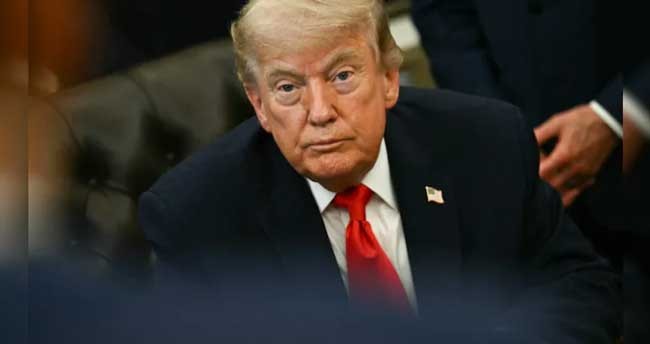
Desk: US President Donald Trump is facing growing opposition to his tariff policy within his own Republican Party. Following the party’s disappointing performance in recent elections, several Republican lawmakers have expressed support for reviewing the administration’s trade measures. The changing stance could also give the Democratic Party an opportunity to build bipartisan support against Trump's sweeping import duties.
Rising inflation and increasing prices of everyday goods have emerged as major concerns among American voters. Republican lawmakers are increasingly acknowledging that broad-based tariffs could be placing an additional financial burden on American consumers, farmers, small businesses and domestic industries.
Several Republican Lawmakers Support Reviewing Tariff Policy
According to a report by the Associated Press (AP), more than six Republican lawmakers were interviewed following the elections, and most expressed support for reconsidering at least some aspects of Trump's tariff policy.
However, lawmakers have indicated that they do not necessarily favour eliminating all tariffs. Instead, they believe individual trade measures should be reviewed based on their economic impact and specific circumstances.
US Senator Todd Young said the tariff policy needs reconsideration, emphasising that trade decisions should take consumer interests into account.
Republican Representative Michael Guest also indicated that he could find common ground with Democrats on certain issues. However, he stopped short of supporting a complete restriction on the President's authority to impose tariffs.
Tariffs on Canada Could Become the First Major Flashpoint
Tariffs imposed on Canadian imports could emerge as one of the first major issues in the growing debate over Trump's trade policy. Democratic lawmakers have already been demanding the withdrawal of duties imposed on Canada.
Republican Senator John Kennedy has also questioned the tariffs on Canadian goods, saying he does not consider them justified in the current circumstances. However, he expressed support for certain tariffs imposed on countries such as China.
Senator Todd Young has also called for a clearer and more predictable tariff framework to ensure that American factories, farmers, small businesses and ordinary households do not face unnecessary economic pressure.
Lawmakers Seek Greater Congressional Oversight
Some Republican lawmakers are also calling for a greater role for the United States Congress in decisions concerning the imposition of tariffs.
Senator Mike Rounds said Congress should reconsider whether the powers granted to the President to impose tariffs need to be modified, amended or restricted.
However, Republicans remain divided on the issue. Senator Josh Hawley cautioned against making sweeping changes to the existing tariff framework too quickly. He suggested that there should be no rush to completely reverse Trump's trade policy.
Trump's Veto Power Could Complicate Any Reversal
Any attempt to roll back Trump's tariff policy could face significant legislative hurdles. Even if Congress passes a bill seeking to withdraw certain tariffs, the President retains the power to exercise his presidential veto.
To override a presidential veto, lawmakers would need a two-thirds majority in the Senate, requiring at least 67 votes.
Meanwhile, White House spokesperson Matthew Middleton defended the administration's approach, saying the government remains committed to strengthening American communities, lowering costs and expanding economic opportunities for working families.
Republican Voters Also Divided Over Tariffs
An Associated Press voter survey indicates that Republican voters themselves remain divided over the economic impact of Trump's tariff policy.
According to the survey, approximately half of voters who supported Republican candidates believed Trump's tariffs had benefited the US national economy. Around 30 per cent considered the policy harmful to the economy, while nearly one-quarter said it had made little or no difference.
The growing debate suggests that Trump's tariff policy is no longer just a point of confrontation between Republicans and Democrats. It is increasingly becoming a subject of disagreement within the Republican Party itself.
The coming weeks will be crucial in determining whether Republican lawmakers join hands with Democrats to push for changes to Trump's trade policy or continue supporting the President's approach despite growing concerns over its economic consequences.
What's Your Reaction?
 Like
0
 Dislike
0
 Love
0
 Funny
0
 Wow
0
 Sad
0
 Angry
0

Ajay Gupta is a Senior Digital Content Producer at Prime Time India (PTI) Digital. He brings 19 years of experience, spanning both field reporting and desk-based editorial work. He began his journalistic career in 2006 with the Hindi newspaper Jansansar. He possesses extensive experience covering politics and crime, and has also worked on the central desk at Dainik Jagran, Nai Dunia, Haribhoomi. Furthermore, he has covered numerous elections from the ground. For the past six years, he has been working on the digital news desk at PTI (Prime Time India). He also has a strong grasp of Google Trends and podcasts.













Comments (0)