
Thiruparankundram Hill Dispute: Hindu, Jain and Muslim Claims Behind the Karthigai Deepam Row
Explore the century-old Thiruparankundram Hill dispute in Tamil Nadu, involving a Hindu temple, a Muslim dargah and the Karthigai Deepam lighting tradition.
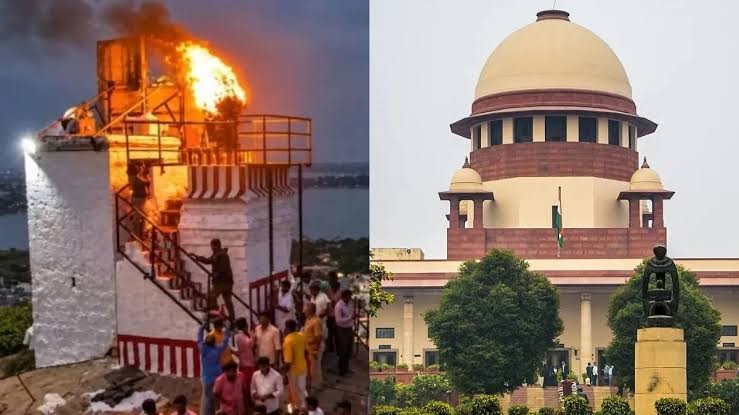
One Hill, Three Religions and a Century-Old Dispute: The Story Behind the Karthigai Deepam Controversy
New Delhi: Every year, on the full moon day of the Tamil month of Karthigai, Tamil Nadu celebrates the festival of Karthigai Deepam, a festival of lights that bears some resemblance to Diwali. Homes, streets and public spaces are illuminated with traditional oil lamps. However, this year's celebrations have attracted particular attention because of a long-running dispute over the lighting of a traditional lamp on Thiruparankundram Hill in Madurai.
The controversy centres on a stone pillar, known as the Deepathoon, where devotees seek permission to light the traditional Karthigai Deepam. A dargah dedicated to the Sufi saint Sikandar Badhusha is also located on the same hill.
On November 20, the Supreme Court passed an interim order allowing the traditional lamp to be lit on the disputed pillar on November 24, during the Karthigai Deepam festival. The permission, however, is restricted to individuals authorised by the Subramaniya Swamy Temple administration and government officials.
The ruling has brought renewed attention to a dispute involving religious traditions, historical claims, property rights and questions of public order.
History of the Thiruparankundram Hill Dispute
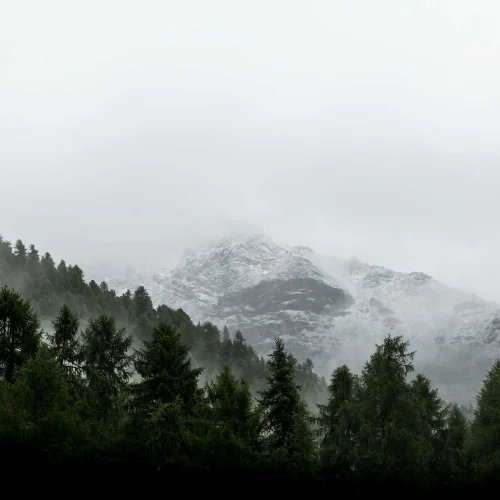
Thiruparankundram Hill is located on the outskirts of Madurai in Tamil Nadu and rises approximately 1,050 feet above the surrounding area.
At the foot of the hill stands the ancient cave temple dedicated to Lord Subramaniya Swamy, where Hindus have worshipped for centuries. The hill also contains several caves and rock formations associated with Jainism.
At its summit is the tomb of the Sufi saint Sikandar Badhusha, around which a dargah was subsequently established.
The hill therefore has religious and historical associations with three communities: Hindus, Jains and Muslims. It is also known as Samana Hill because of its Jain connections and as Sikandar Hill after the Sufi saint.
Over the years, the hill has remained a centre of religious activity. Disagreements over worship practices, access and the use of different parts of the hill have occasionally led to tensions, requiring police deployment during important festivals.
How Did the Matter Reach the Supreme Court?
The legal dispute entered a fresh phase when the Tamil Nadu government approached the Supreme Court in June this year, challenging an earlier ruling by a two-judge bench of the Madras High Court.
Officials associated with the dargah and other parties also filed petitions before the apex court.
During the proceedings, the Tamil Nadu government argued that allowing a lamp to be lit on the stone pillar near the dargah could create wider implications. It contended that similar claims might subsequently be made regarding thousands of survey stones located across the country, potentially presenting them as religious structures.
With the Karthigai Deepam festival approaching, the Supreme Court considered the matter and issued an interim order on November 20. It permitted the traditional lamp to be lit on the disputed stone pillar on November 24.
The permission was granted as a one-time arrangement and was accompanied by directions for necessary security measures. The court also restricted the activity to authorised representatives of the temple and government officials.
A Legal Dispute Dating Back to 1920
The legal history of the hill goes back more than a century. In 1920, the organisation managing the Subramaniya Swamy Temple filed a lawsuit claiming ownership of the entire hill.
A lower court delivered its judgment in 1923, dividing rights over different portions of the hill.
The court held that most of the open areas and the pathways used by devotees belonged to the temple. However, the highest peak, the area surrounding the mosque, the Nellikuthoppu region and the steps leading to the mosque were recognised as belonging to the Muslim side.
This judgment established the division of rights over different parts of the hill. However, disagreements over the interpretation and implementation of the arrangement continued in subsequent decades.
In 2021, another controversy emerged over the replacement of a wooden flagstaff at the dargah with an iron one.
In early 2025, tensions arose again following an attempt to sacrifice animals near the hilltop. A three-judge bench subsequently imposed restrictions, observing that the hill was a protected historical monument governed by the regulations of the Archaeological Survey of India (ASI).
The latest dispute concerns the lighting of a traditional lamp on a stone pillar near the summit. The structure, known as the Deepathoon, is located approximately 50 metres from the dargah.
Earlier Attempts to Light the Lamp Were Stopped
Documents presented before the court indicate that attempts to light a lamp near the hilltop during the 19th century and the early 20th century were stopped by the authorities.
The reasons cited included the absence of an established tradition of lighting the lamp at that particular location and concerns that the activity could create law-and-order problems.
The issue returned to court in 1994, when some individuals attempted to light the Karthigai Deepam at the hilltop.
In 1996, the Madras High Court directed that the lamp should instead be lit at a designated location near the Uchipillaiyar Temple, situated on the lower slope of the hill.
The court also allowed the temple administration to identify an alternative location, subject to the condition that it remain at least 15 metres away from the dargah, the steps leading to it and the Nellikuthoppu area.
Following this order, the traditional Karthigai Deepam lamp continued to be lit at the Deepa Mandapam near the Uchipillaiyar Temple for several decades.
What Did the Court Say About the Festival Dispute?
The controversy resurfaced towards the end of November 2025, when a group of devotees approached the court seeking permission to light the Karthigai Deepam on the stone pillar at the hilltop on December 3.
On December 1, a single-judge bench of the Madras High Court allowed their request, treating it as an attempt to revive an older religious tradition.
The court directed the temple administration to arrange for the lamp to be lit at the hilltop with police assistance.
In its order, the court observed that Karthigai is a festival of lights during which lamps are traditionally lit not only in prayer rooms but throughout homes. It therefore directed that the lamp should also be lit on the Deepathoon from that year onwards.
When temple officials expressed their inability to implement the order, citing concerns over a possible law-and-order situation, the judge initiated contempt proceedings against them. The court also permitted a small group to proceed to the hilltop under security arrangements.
However, the state government and the Hindu Religious and Charitable Endowments (HR&CE) Department challenged the decision.
They argued that disputes concerning religious practices and the use of places of worship should be addressed under the HR&CE Act rather than through a direct petition before the High Court.
The government also questioned the religious identity of the stone pillar. It argued that the structure might not have been designed for lighting a traditional lamp and could instead be a land-survey marker or an old structure associated with Jain heritage.
The latest Supreme Court proceedings have therefore brought the long-standing questions of historical practice, religious rights, property claims and public order back into focus.
What's Your Reaction?
 Like
0
 Dislike
0
 Love
0
 Funny
0
 Wow
0
 Sad
0
 Angry
0

Vivek Awasthi is a Digital Content Producer at Prime Time India (English). He joined in March 2025. As a member of the news team, he is responsible for editing and curating national news, as well as stories concerning Delhi and crime. He also engages in field reporting from time to time; Vivek has a keen interest in going out into the field to uncover the stories behind the news.






Comments (0)