Delimitation Bill Could Widen North-South Political Divide, Warns P Chidambaram
P Chidambaram criticises the proposed Delimitation Bill, warning that a 50% increase in Lok Sabha seats could widen the political representation gap between southern and other Indian states.
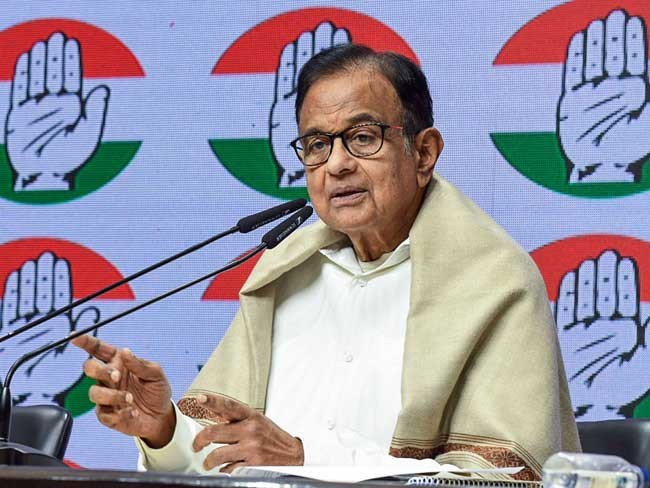
New Delhi: Senior Congress leader and former Union Finance Minister P. Chidambaram has criticised the Centre's proposed Delimitation (Second) Bill, 2026, warning that the proposed 50 per cent increase in parliamentary seats could widen the representation gap between southern states and the rest of the country.
In a post on social media platform X, Chidambaram argued that although the proposed legislation seeks to maintain the existing proportion of Lok Sabha seats allocated to each state for the next 25 years, it fails to address what he described as a fundamental concern — the growing difference in the absolute number of seats between southern states and other states.
According to Chidambaram, the proposed 50 per cent expansion would increase the existing gap in parliamentary representation from 413 seats to 620 seats. He cautioned that the larger numerical difference could significantly overshadow the collective strength of MPs representing southern states in Parliament.
Chidambaram Questions the Proposed Seat Expansion
Chidambaram acknowledged that the proposed 25-year freeze on the relative proportion of seats allocated to individual states addresses two of the concerns raised by the Opposition. However, he maintained that preserving the percentage share alone would not ensure balanced political representation.
He emphasised that absolute numbers also matter in a parliamentary democracy, where legislative decisions are often determined by a simple majority.
The Congress leader further argued that the increased numerical gap could weaken the collective political influence of southern states, even if their proportional representation in the Lok Sabha remains unchanged.
Raises Concerns Over Gerrymandering
Apart from the widening regional representation gap, Chidambaram also raised concerns about the possibility of gerrymandering during the delimitation exercise.
He warned that redrawing constituency boundaries within states could provide opportunities for political manipulation if adequate safeguards were not in place.
The former Union Minister cautioned that such an exercise could allow the ruling establishment to influence electoral constituencies for political advantage, making the delimitation process a matter of concern for democratic fairness.
Centre Proposes 50 Per Cent Increase in Seats
The proposed Delimitation (Second) Bill, 2026, is part of the Centre's broader legislative effort to expand parliamentary representation and facilitate the implementation of 33 per cent women's reservation in the Lok Sabha and state Legislative Assemblies.
The proposed framework seeks to increase the number of Lok Sabha seats by 50 per cent across states and Union Territories. The strength of the Lower House could rise from the existing 543 seats to a maximum of 850.
The proposal also seeks to preserve the existing relative distribution of seats among states for another 25 years, while allowing constituency boundaries to be redrawn within individual states.
Delimitation Debate Ahead of Parliament's Special Session
The proposed legislation is expected to become a major political issue during the special session of Parliament scheduled from November 30 to December 3, 2026.
The delimitation proposal has triggered debate between the ruling government and Opposition parties, particularly over regional representation, the balance of political power and the safeguards required to ensure a fair electoral process.
While the Centre's proposed changes aim to address concerns about the representation of states, Chidambaram's objections underline that the debate is not merely about increasing the number of parliamentary seats but also about maintaining a balanced political voice for different regions of the country.
The coming parliamentary session is likely to witness further discussion on these concerns as the government seeks support for its proposed legislative changes.
What's Your Reaction?
 Like
0
 Dislike
0
 Love
0
 Funny
0
 Wow
0
 Sad
0
 Angry
0

Ajay Gupta is a Senior Digital Content Producer at Prime Time India (PTI) Digital. He brings 19 years of experience, spanning both field reporting and desk-based editorial work. He began his journalistic career in 2006 with the Hindi newspaper Jansansar. He possesses extensive experience covering politics and crime, and has also worked on the central desk at Dainik Jagran, Nai Dunia, Haribhoomi. Furthermore, he has covered numerous elections from the ground. For the past six years, he has been working on the digital news desk at PTI (Prime Time India). He also has a strong grasp of Google Trends and podcasts.







Comments (0)