India Plans Major Electoral Shake-Up: Lok Sabha Seats May Rise to 850, 33% Women’s Reservation Proposed
India proposes increasing Lok Sabha seats to 850, introducing 33% women’s reservation and completing a nationwide delimitation exercise before the 2029 elections.
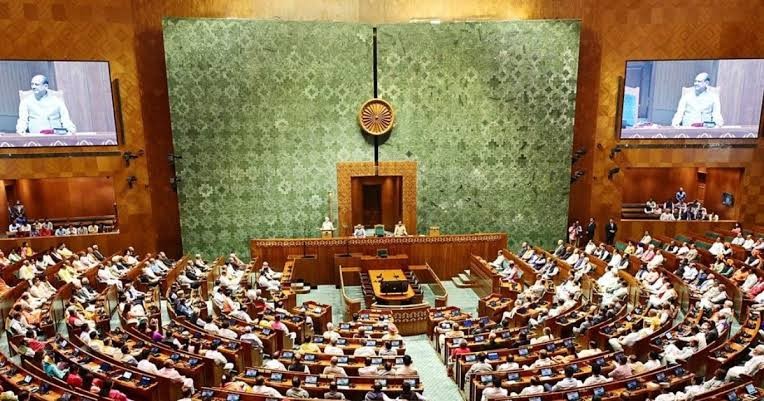
New Delhi: India is preparing for a major overhaul of its electoral and political framework, with proposed legislation seeking to increase the strength of the Lok Sabha and state legislative assemblies by up to 50 per cent, introduce 33 per cent reservation for women, and complete a fresh delimitation exercise before the 2029 Lok Sabha elections.
The proposed legislative package also envisages keeping the allocation of seats among states and the delimitation framework unchanged until 2051.
According to the legislative proposals approved by the Union Cabinet, the maximum strength of the Lok Sabha could be increased from the existing 550 to 850 members. Similarly, the maximum strength of state legislative assemblies may be raised to 650 members. In Uttar Pradesh, the country's most populous state, the number of Assembly seats is proposed to increase from 403 to 650.
Under the proposed framework, the Centre does not intend to wait for the completion of the 2026 Census to implement women's reservation. Instead, the government plans to use the 2011 Census as the basis for redrawing constituencies, while retaining the 1971 Census as the reference point for determining the proportional allocation of seats among states.
Three Bills Proposed to Reshape India's Electoral System
The legislative package comprises two Constitutional Amendment Bills and one amendment relating to Union Territories.
The Constitution (131st Amendment) Bill proposes changes to provisions governing the allocation of seats among states. It seeks to retain the 1971 Census as the basis for determining the proportion of parliamentary representation allocated to different states.
The Constitution (132nd Amendment) Bill, 2026 aims to facilitate delimitation and the redrawing of electoral constituencies based on the 2011 Census.
Meanwhile, the Delimitation (Second) Bill, 2026 proposes a 50 per cent increase in the number of Lok Sabha seats allocated to each state and Union Territory, along with an expansion of state legislative assemblies. Section 10 of the Bill also contains specific provisions relating to women's reservation.
33% Reservation for Women in Lok Sabha and State Assemblies
One of the most significant proposals is the introduction of 33 per cent reservation for women in the Lok Sabha and state legislative assemblies.
The proposed provision also includes reservation for women within seats already reserved for Scheduled Castes (SCs) and Scheduled Tribes (STs).
The reservation is proposed to remain in force for 15 years, covering three electoral terms. The framework also provides for periodic rotation of constituencies reserved for women.
The government intends to implement the reservation through the proposed delimitation exercise, avoiding the need to wait until the completion of the 2026 Census.
Delimitation Exercise Targeted for Completion Within Two Years
Following parliamentary approval of the proposed legislation, the government plans to establish a new Delimitation Commission to redraw electoral constituency boundaries across the country.
The Centre aims to complete the exercise within two years, allowing the revised electoral map to be ready before the 2029 Lok Sabha elections.
The proposed framework also seeks to maintain stability in seat allocation and constituency delimitation until 2051.
Bills Likely to Be Introduced During Parliament's Special Session
According to sources, the Centre is confident of securing the two-thirds majority required in Parliament for the passage of the delimitation legislation.
The government is preparing to introduce the Delimitation (Second) Bill, 2026, during Parliament's special session beginning November 30.
Sources said a meeting of the Business Advisory Committee (BAC) is scheduled for Monday at 10 AM. Representatives of various political parties are expected to discuss the proposed legislative business during the meeting.
The voting process in the Lok Sabha is likely to be lengthy. According to sources, the voting scheduled for December 1 could take approximately five to six hours.
Delimitation Could Become a Major Political Flashpoint
The proposed electoral reforms are expected to trigger extensive political debate in Parliament. Issues such as the distribution of parliamentary representation among states, regional balance, constituency boundaries and women's participation in politics are likely to dominate discussions.
If passed by Parliament, the proposed legislation could bring substantial changes to India's electoral structure.
An expanded Lok Sabha and state assemblies, a revised constituency map and 33 per cent reservation for women ahead of the 2029 general elections could significantly reshape the country's political landscape.
What's Your Reaction?
 Like
0
 Dislike
0
 Love
0
 Funny
0
 Wow
0
 Sad
0
 Angry
0

Ajay Gupta is a Senior Digital Content Producer at Prime Time India (PTI) Digital. He brings 19 years of experience, spanning both field reporting and desk-based editorial work. He began his journalistic career in 2006 with the Hindi newspaper Jansansar. He possesses extensive experience covering politics and crime, and has also worked on the central desk at Dainik Jagran, Nai Dunia, Haribhoomi. Furthermore, he has covered numerous elections from the ground. For the past six years, he has been working on the digital news desk at PTI (Prime Time India). He also has a strong grasp of Google Trends and podcasts.






Comments (0)