
India Wants Constructive Ties with Bangladesh Amid Sheikh Hasina Extradition Row
MEA spokesperson Randhir Jaiswal reiterates India's commitment to positive ties with Bangladesh amid diplomatic delays and the Sheikh Hasina extradition issue.
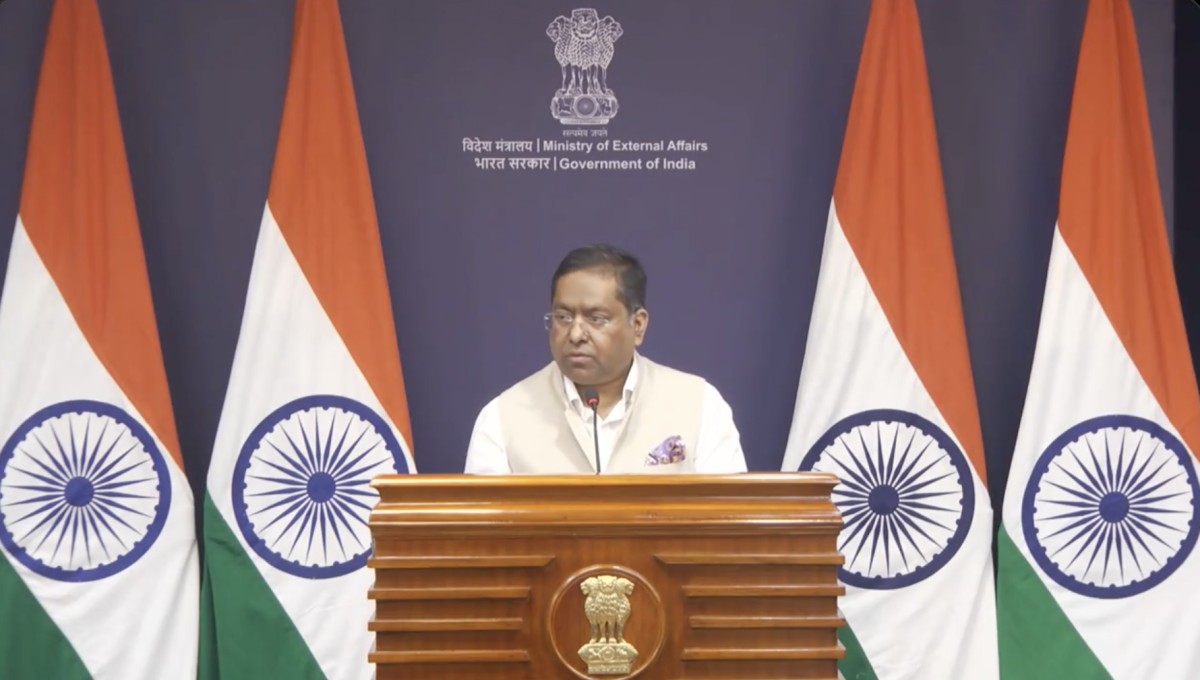
India has reiterated its commitment to maintaining positive and constructive relations with Bangladesh amid continuing diplomatic challenges between the two neighbouring countries. Ministry of External Affairs (MEA) spokesperson Randhir Jaiswal has reportedly emphasised New Delhi's desire to maintain stable bilateral ties despite differences over several sensitive issues, including the extradition of former Bangladesh Prime Minister Sheikh Hasina.
The statement comes at a time when diplomatic discussions between India and Bangladesh have faced delays, adding uncertainty to the relationship between the two countries.
MEA Reaffirms India's Position on Bangladesh Relations
According to the report by Navbharat Times, MEA spokesperson Randhir Jaiswal said India wants to maintain positive and constructive relations with Bangladesh.
New Delhi has consistently highlighted the importance of its relationship with Dhaka, given the close geographical, economic, cultural and historical connections between the two countries.
Cooperation between India and Bangladesh covers several areas, including trade, connectivity, security, energy and regional development.
Sheikh Hasina Extradition Issue Adds to Diplomatic Challenges
The extradition issue involving former Bangladesh Prime Minister Sheikh Hasina has emerged as a sensitive subject in bilateral relations.
Hasina has been staying in India since leaving Bangladesh in August 2024 following major political unrest that led to the end of her government.
Bangladesh's request concerning her return has become an important diplomatic matter. The issue involves legal procedures as well as political considerations, making it particularly sensitive for both governments.
India's position and the legal framework governing any possible extradition remain central to the discussions.
Bilateral Talks Face Delays
The postponement of diplomatic discussions has also drawn attention to the current state of India-Bangladesh relations.
Regular communication between the two countries remains important for addressing differences and maintaining cooperation on shared priorities.
Despite the challenges, both sides have significant reasons to maintain dialogue, particularly because of their interconnected economies, border security concerns and regional interests.
Why India-Bangladesh Relations Matter
India and Bangladesh share a long border and extensive historical and cultural connections. Bangladesh is also an important partner for India's regional connectivity and its broader engagement with South Asia.
Cooperation between the neighbours has implications for cross-border trade, transportation, energy projects, security and people-to-people relations.
Any prolonged diplomatic uncertainty could affect these areas, making continued engagement important for both countries.
Diplomatic Engagement Remains Important
Randhir Jaiswal's reported remarks underline India's stated preference for constructive engagement with Bangladesh despite outstanding disagreements.
The coming period will be important in determining how both governments address sensitive issues, including the extradition request involving Sheikh Hasina and the scheduling of bilateral discussions.
For now, India's public position indicates that it wants to preserve a positive relationship while continuing to deal with the issues affecting bilateral ties.
What's Your Reaction?
 Like
0
 Dislike
0
 Love
0
 Funny
0
 Wow
0
 Sad
0
 Angry
0

Jaspreet Walia is a digital content producer at Prime Time India. He has 6 years of experience in journalism and covers international affairs (world section). He began his digital career with Amar Ujala, subsequently worked with Surbhi Saloni Hindi and Patrika, and is now with Prime Time India. He completed his education at Chaudhary Charan Singh University and the Indian Institute of Mass Communication.












Comments (0)